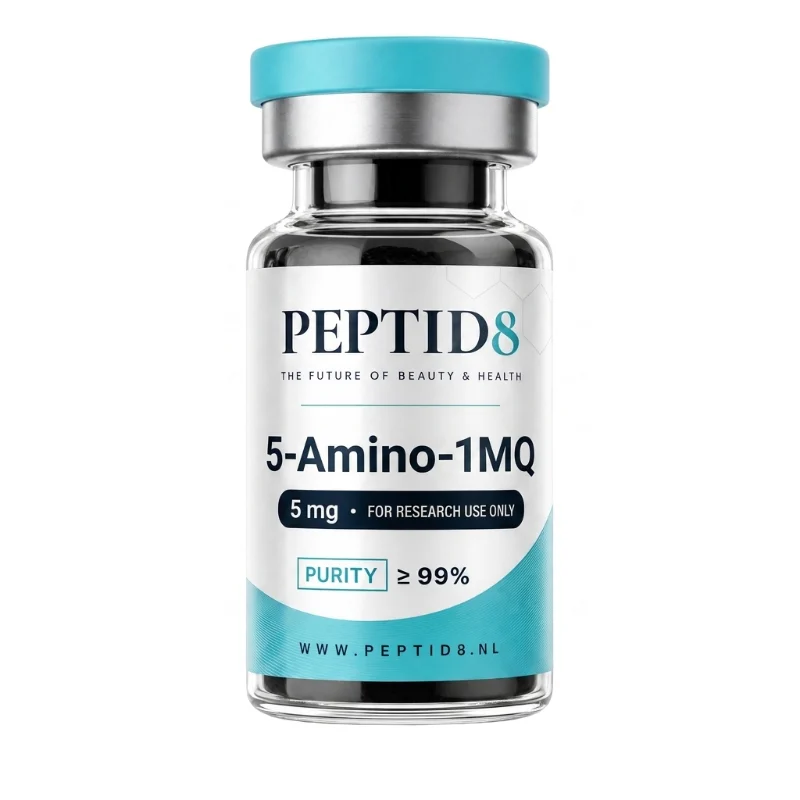
Buy 5-Amino-1MQ – 5 mg
Small molecule (quinolinium compound) that inhibits the enzyme NNMT in research
FM-05Metabolic researchLYOPHILIZEDCAS 685079-15-6
Laagste prijs van de afgelopen 30 dagen: € 59,98
Choose your quantity
Shipping to NL € 4,95 · free from € 200,00
| Country | Rate | Free from | Delivery time |
|---|---|---|---|
| Nederland | € 4,95 | € 200,00 | volgende werkdag |
| België | € 9,95 | € 200,00 | 1–4 werkdagen |
| Duitsland | € 9,95 | € 200,00 | 1–4 werkdagen |
| Frankrijk | € 9,95 | € 200,00 | 1–4 werkdagen |
| Oostenrijk | € 9,95 | € 200,00 | 1–4 werkdagen |
| Spanje | € 9,95 | € 200,00 | 1–4 werkdagen |
| Italië | € 9,95 | € 200,00 | 1–4 werkdagen |
| Zweden | € 9,95 | € 200,00 | 1–4 werkdagen |
| Polen | € 9,95 | € 200,00 | 1–4 werkdagen |
- Dispatched from the Netherlands
- No customs within the EU
- Damaged or lost? We'll send a replacement
- Returns within 14 days, unopened
- Secure connection
Wat je ontvangt
- 1× vial 5 mg (lyophilized)
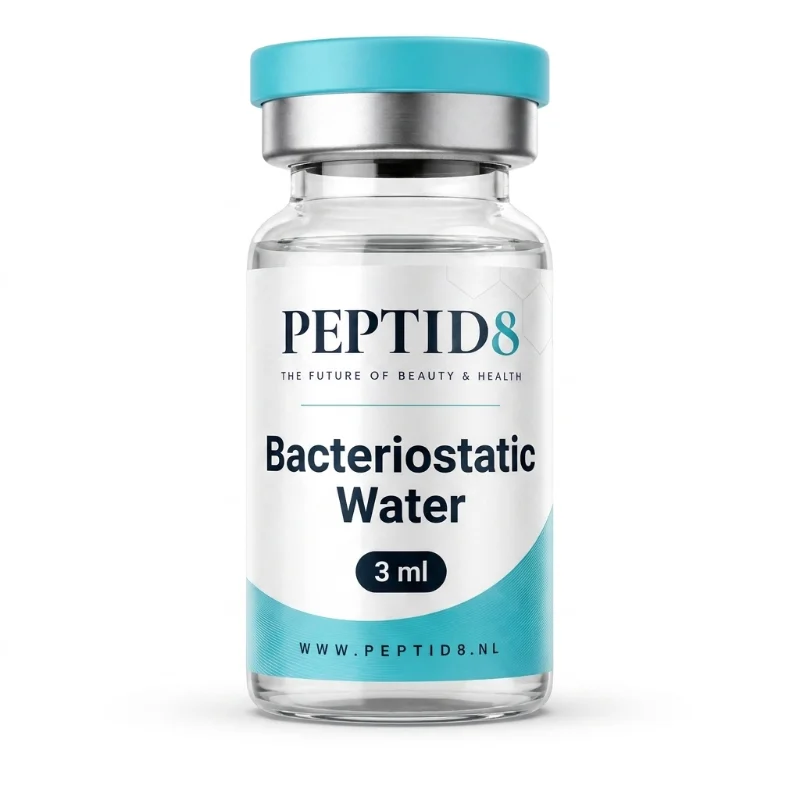
- Bacteriostatisch water apart te bestellen
Wat is 5-Amino-1MQ?
5-Amino-1MQ (5-amino-1-methylquinolinium) is een klein molecuul van 159,21 g/mol (kation), CAS 685079-15-6. Het is een quinoliniumverbinding en dus geen peptide. In onderzoek werkt het als remmer van nicotinamide-N-methyltransferase (NNMT), een enzym dat nicotinamide methyleert en zo samenhangt met de beschikbaarheid van NAD+.
Onderzoek
5-Amino-1MQ werd beschreven in preklinisch onderzoek naar selectieve, membraandoorlaatbare NNMT-remmers in muismodellen (2018). Recentere publicaties richten zich op de rol van het enzym NNMT zelf, bijvoorbeeld in kanker-geassocieerde fibroblasten (Nature 2025) en in nierfibrose (Cell Reports 2026). Dat onderzoek gaat over het enzym en zijn remming in modellen, niet over dit product.
Wat je bestelt
Gelyofiliseerd materiaal in een vial, op te lossen met bacteriostatisch water. De zoutvorm en de nominale vialinhoud worden nog bevestigd; controleer bij ontvangst de etiketgegevens en leg lot en zoutvorm vast in je onderzoeksadministratie. Of er voor de gekozen variant een labrapport is, zie je in het labrapport-blok op deze pagina; alle gepubliceerde rapporten staan op de certificatenpagina.
Uitsluitend voor in-vitro-onderzoek en laboratoriumgebruik. Niet voor menselijke of veterinaire toepassing.
5-Amino-1MQ kopen voor laboratoriumonderzoek
5-Amino-1MQ kopen begint met het selecteren van de gewenste variant en het aantal op deze productpagina. Bekijk vóór het afronden de actuele voorraad en verzendinformatie; op werkdagen vóór 22:00 besteld en betaald, dezelfde dag verzonden vanuit Nederland. Dit onderzoeksmateriaal is uitsluitend bestemd voor laboratoriumonderzoek, niet voor gebruik bij mens of dier.
Lab report
98,7%
measured purity
getest 27-4-2026 · BTLabs
tested: 50 mg
Identity confirmed (MS)
Tested on our behalf
- HPLC
- FTIR
All reports for this product
| Tested strength | Test # | Date | Purity | |
|---|---|---|---|---|
| 50 mg | #RT20487545 | 27-4-2026 | 98,7% | Current |
Zoek een rapport op lotnummer, testnummer of stofnaam en open het bij het lab. De rapporten zijn opgesteld door BTLabs: HPLC voor de zuiverheid, FTIR voor de identiteit. Het lotnummer op je vial hoort terug te komen in het rapport.
Zo lees je de status
- Groen percentage: het rapport hoort bij de bevestigde sterkte van de batch die we nu leveren.
- Neutraal percentage: het rapport hoort bij dezelfde sterkte, maar niet aantoonbaar bij de lopende batch.
- Amber, "rapport van een andere sterkte": het rapport is gemaakt op een vial met een andere inhoud.
- "Test van leverancier · sterkte wordt bevestigd": een rapport van de leverancier waarvan we de geteste sterkte nog bevestigen; zonder percentage.
- "Batchrapport volgt": er is nog geen rapport. We noemen dan geen datum.
Een rapport zegt iets over het geteste monster. Hoe je het leest, staat in Zo lees je een BTLabs-batchrapport.
Stap 1
Purity by HPLC
Liquid chromatography separates the sample; purity is the proportion represented by the main peak.
Stap 2
Identity by FTIR
FTIR compares the sample’s infrared spectrum with a reference spectrum to confirm identity.
Stap 3
Content by quantitative testing
A separate measurement determines how much substance is in the vial, where included in the report.
Product
- Product code
- FM-05
- CAS number
- 685079-15-6
- Form
- Gelyofiliseerd poeder
Samenstelling
- Molecular formula
- C10H11N2+ (kation; zoutvorm niet opgegeven)
- Molecular weight
- 159,21 g/mol (kation)
Kwaliteit
- Lab
- BTLabs
- Purity
- 98,7%
- Last test
- 27-4-2026
Opslag
- Ongeopend
- −20 °C, dark and dry
- After reconstitution
- 2–8 °C, use within 28–30 days
Verpakking
- Inhoud per vial
- 5 mg
Literatuur
- PubMed
- Search PubMed
Reconstitution and concentration helper
The report covers a 50 mg vial; your vial is 5 mg.
Concentration
2,5 mg/ml
Storage after reconstitution: 2–8 °C, use within 28–30 days
Moleculaire gegevens (PubChem)
PubChem-record CID 950107 (5-amino-1-methylquinolinium) met formule C10H11N2+, 159,21 g/mol en CAS 685079-15-6.
Sources: pubchem.ncbi.nlm.nih.gov
| kenmerk | 5-Amino-1MQ | L-Carnitine |
|---|---|---|
| Stofklasse | Quinoliniumverbinding (geen peptide) | Quaternaire ammoniumverbinding (geen peptide) |
| Molecuulmassa | 159,21 g/mol (kation) | 161,20 g/mol |
| CAS | 685079-15-6 | 541-15-1 |
| Vorm | Gelyofiliseerd, oplossen nodig | Oplossing, klaar voor gebruik |
| Onderzoeksonderwerp | Remming van het enzym NNMT | Mitochondriaal vetzuurtransport |
- Dispatched from the Netherlands
- No customs within the EU
- Damaged or lost? We'll send a replacement
- Returns within 14 days, unopened
| Country | Rate | Free from | Delivery time |
|---|---|---|---|
| PostNL | € 4,95 | € 200,00 | volgende werkdag |
| PostNL | € 9,95 | € 200,00 | 1–4 werkdagen |
Is 5-Amino-1MQ a peptide?
No. It is a small molecule (quinolinium compound) of 159,21 g/mol. It is listed in the catalog because it is studied in the same metabolic research field.
What is NNMT?
Nicotinamide-N-methyltransferase, an enzyme that methylates nicotinamide. It is investigated due to its connection to NAD+ metabolism; 5-Amino-1MQ inhibits this enzyme in research models.
Is there a lab report?
You can see this in the lab report block on this page; it updates with the selected variant. All published reports can be found on the certificates page. The molecular data can be verified via PubChem CID 950107.
How do I store 5-Amino-1MQ?
Unopened at −20 °C, dark and dry. After reconstitution at 2–8 °C and use within 28–30 days, or the timeframe of your protocol.
How do I reconstitute it?
With bacteriostatic water along the glass wall, then gently swirl until the solution is clear. The peptide calculator calculates the concentration.
What is the difference with NAD+?
NAD+ is itself a coenzyme. 5-Amino-1MQ is an inhibitor of an enzyme (NNMT) that plays a role in NAD+ metabolism; they are distinct substances with their own product page.
How is it shipped and does it need to be refrigerated?
The lyophilisate is shipped dry in plain packaging without mention of the contents, from the Netherlands via PostNL (NL next business day, EU 1–4 business days). Place the vial at the correct storage temperature immediately upon receipt.
What is in the package?
One vial with lyophilized material. Bacteriostatic water, syringes and alcohol wipes can be ordered separately.
How do I place an order?
Place products in your shopping cart and complete the order at checkout. There you enter your details, choose a payment method, and confirm the three mandatory declarations. You will immediately receive a confirmation by email with the overview and, in case of payment by bank transfer, the payment details.
When will my order be shipped?
Ordered and paid before 22:00 on business days: shipped the same day. In the case of a bank transfer, the time your payment is received applies. After 22:00, on weekends, or on public holidays, your order will be dispatched on the next business day. If it is busy, this will be stated at the top of the site with the new shipping date.
Complete your research
Related research
All in Metabolic research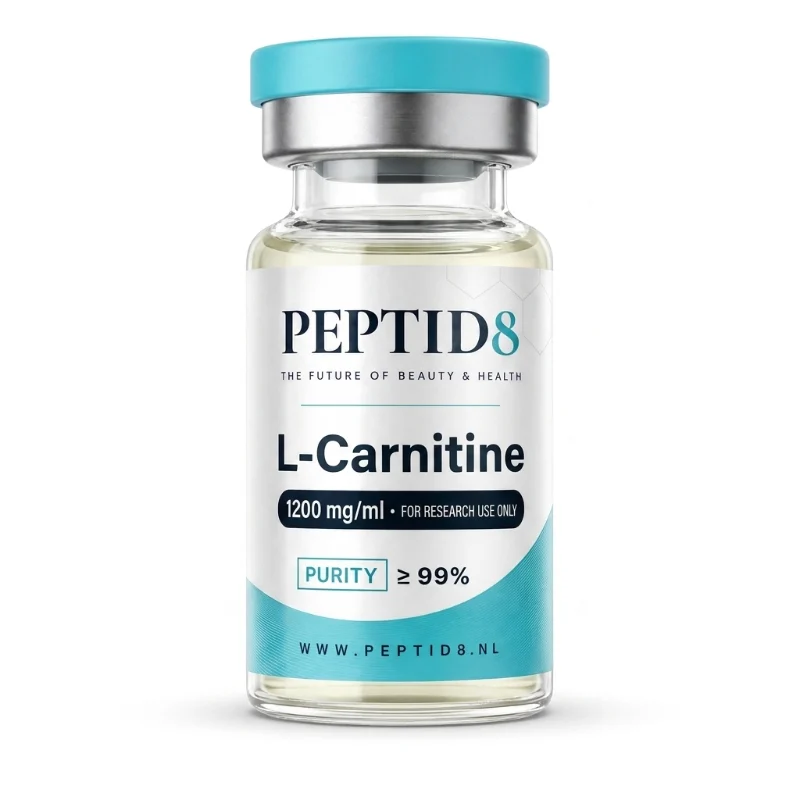
Read more
MOTS-c: the mitochondrial peptide in research
MOTS-c is a 16-amino acid peptide from the mitochondrial genome. What cell and animal models show regarding AMPK, metabolism, and aging, and what human research measures.