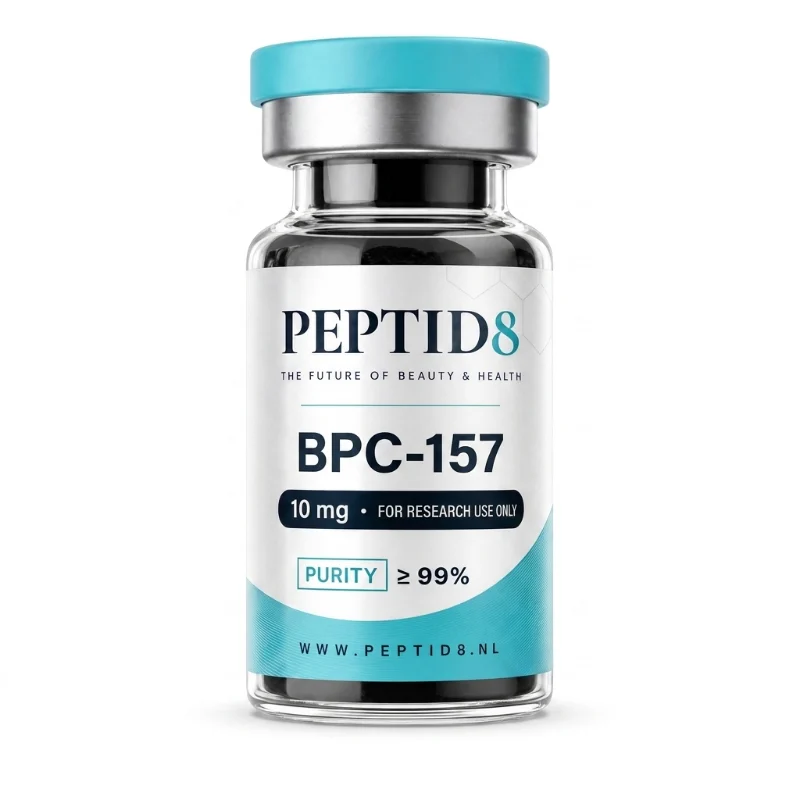
Buy BPC-157 – 10 mg (research use only)
Synthetic pentadecapeptide (15 amino acids) for preclinical laboratory research
RH-01Recovery ResearchLYOPHILIZEDCAS 137525-51-0
Laagste prijs van de afgelopen 30 dagen: € 49,98
Choose your quantity
Shipping to NL € 4,95 · free from € 200,00 · free Bacteriostatisch water (3 ml) on orders from € 100,00
| Country | Rate | Free from | Delivery time |
|---|---|---|---|
| Nederland | € 4,95 | € 200,00 | volgende werkdag |
| België | € 9,95 | € 200,00 | 1–4 werkdagen |
| Duitsland | € 9,95 | € 200,00 | 1–4 werkdagen |
| Frankrijk | € 9,95 | € 200,00 | 1–4 werkdagen |
| Oostenrijk | € 9,95 | € 200,00 | 1–4 werkdagen |
| Spanje | € 9,95 | € 200,00 | 1–4 werkdagen |
| Italië | € 9,95 | € 200,00 | 1–4 werkdagen |
| Zweden | € 9,95 | € 200,00 | 1–4 werkdagen |
| Polen | € 9,95 | € 200,00 | 1–4 werkdagen |
- Dispatched from the Netherlands
- No customs within the EU
- Damaged or lost? We'll send a replacement
- Returns within 14 days, unopened
- Secure connection
Wat je ontvangt
- 1× vial 10 mg (lyophilized)
- Bacteriostatisch water apart te bestellen
What is BPC-157?
BPC-157 is a synthetic pentadecapeptide: a chain of fifteen amino acids (GEPPPGKPADDAGLV), derived from a sequence described in a protein from human gastric juice. In the literature, it is also known as Body Protection Compound-157 or BPC 157. The molecular formula is C62H98N16O22, the molecular mass is 1419.5 g/mol, and the CAS number is 137525-51-0.
What is the research about?
BPC-157 is among the more frequently studied peptides in preclinical research on tissue repair. A 2025 literature and patent review inventories research on tendons, ligaments, muscle tissue, and the gastrointestinal mucosa; a systematic review from the same year examines its place within orthopedic sports research. The vast majority of this work consists of animal models and cell culture. Controlled clinical research in humans is scarce, and BPC-157 is not registered as a medicinal product anywhere. A characteristic frequently noted in the literature is the peptide's stability in an acidic environment, making it suitable for setups where other peptides degrade rapidly.
Product and documentation
Supplied as a lyophilized powder, to be reconstituted with bacteriostatic water. Store unopened at −20 °C, and after reconstitution at 2–8 °C. The lab report on this page shows which report belongs to each variant, what strength it is, and how to verify it yourself with the lab. Intended exclusively for laboratory research; not for human or veterinary use.
Buy BPC-157 for laboratory research
Buying BPC-157 begins with selecting the desired variant and quantity on this product page. Check current stock and shipping information before finalizing; ordered and paid on business days before 22:00, shipped the same day from the Netherlands. This research material is intended exclusively for laboratory research, not for human or animal use.
Lab report
98,9%
measured purity
getest 27-4-2026 · BTLabs
tested: 5 mg
Identity confirmed (MS)
Tested on our behalf
- HPLC
- FTIR
All reports for this product
| Tested strength | Test # | Date | Purity | |
|---|---|---|---|---|
| 5 mg | #RT81149149 | 27-4-2026 | 98,9% | Current |
Zoek een rapport op lotnummer, testnummer of stofnaam en open het bij het lab. De rapporten zijn opgesteld door BTLabs: HPLC voor de zuiverheid, FTIR voor de identiteit. Het lotnummer op je vial hoort terug te komen in het rapport.
Zo lees je de status
- Groen percentage: het rapport hoort bij de bevestigde sterkte van de batch die we nu leveren.
- Neutraal percentage: het rapport hoort bij dezelfde sterkte, maar niet aantoonbaar bij de lopende batch.
- Amber, "rapport van een andere sterkte": het rapport is gemaakt op een vial met een andere inhoud.
- "Test van leverancier · sterkte wordt bevestigd": een rapport van de leverancier waarvan we de geteste sterkte nog bevestigen; zonder percentage.
- "Batchrapport volgt": er is nog geen rapport. We noemen dan geen datum.
Een rapport zegt iets over het geteste monster. Hoe je het leest, staat in Zo lees je een BTLabs-batchrapport.
Stap 1
Purity by HPLC
Liquid chromatography separates the sample; purity is the proportion represented by the main peak.
Stap 2
Identity by FTIR
FTIR compares the sample’s infrared spectrum with a reference spectrum to confirm identity.
Stap 3
Content by quantitative testing
A separate measurement determines how much substance is in the vial, where included in the report.
Product
- Product code
- RH-01
- CAS number
- 137525-51-0
- Form
- Gelyofiliseerd poeder
Samenstelling
- Sequence
- Gly-Glu-Pro-Pro-Pro-Gly-Lys-Pro-Ala-Asp-Asp-Ala-Gly-Leu-Val (GEPPPGKPADDAGLV)
- Molecular formula
- C62H98N16O22
- Molecular weight
- 1419,5 g/mol
Kwaliteit
- Lab
- BTLabs
- Purity
- 98,9%
- Last test
- 27-4-2026
Opslag
- Ongeopend
- −20 °C, dark and dry (unopened, lyophilized)
- After reconstitution
- 2–8 °C; within the timeframe of your lab protocol (typically 28–30 days)
Verpakking
- Inhoud per vial
- 10 mg
Literatuur
- PubMed
- Search PubMed
Calculation example: concentration = vial content (mg) ÷ solvent volume (ml). A 10 mg vial in 2 ml bacteriostatic water yields 5 mg/ml; 20 mg in 2 ml yields 10 mg/ml. Check the vial content on the label; the calculator operates in manual mode until the content is specified in the product data. Let the water run down the glass wall and swirl gently, do not shake.
Reconstitution and concentration helper
The report covers a 5 mg vial; your vial is 10 mg.
Concentration
5 mg/ml
Storage after reconstitution: 2–8 °C; within the timeframe of your lab protocol (typically 28–30 days)
Overzicht van onderzoekslijnen
Literatuur- en octrooireview (Pharmaceuticals, 2025) die het preklinische onderzoek naar BPC-157 in onder meer pees-, spier- en maag-darmmodellen inventariseert.
Sources: pubmed.ncbi.nlm.nih.govOrthopedisch sportonderzoek
Systematische review (HSS Journal, 2025) naar de onderzoeksbasis voor BPC-157 binnen de orthopedie, met de constatering dat humane data beperkt zijn.
Sources: pubmed.ncbi.nlm.nih.govZacht weefsel in diermodellen
Review (Cell and Tissue Research, 2019) over preklinische studies naar BPC-157 in modellen van spier-, pees- en ligamentletsel.
Sources: pubmed.ncbi.nlm.nih.govMoleculaire gegevens
PubChem-record met molecuulformule C62H98N16O22 voor BPC-157.
Sources: pubchem.ncbi.nlm.nih.gov
| Kenmerk | BPC-157 | TB-500 |
|---|---|---|
| Type | Pentadecapeptide (15 aminozuren) | Onderzoeksmateriaal verwant aan thymosine bèta-4 |
| Molecuulmassa | 1419,5 g/mol | Nog niet vermeld (identiteit te bevestigen) |
| CAS | 137525-51-0 | Nog niet vermeld |
| Vialinhoud | Nog te bevestigen | 10 mg |
- Dispatched from the Netherlands
- No customs within the EU
- Damaged or lost? We'll send a replacement
- Returns within 14 days, unopened
| Country | Rate | Free from | Delivery time |
|---|---|---|---|
| PostNL | € 4,95 | € 200,00 | volgende werkdag |
| PostNL | € 9,95 | € 200,00 | 1–4 werkdagen |
How do I store BPC-157?
Unopened and lyophilized at −20 °C, dark and dry. After reconstitution at 2–8 °C and process within the timeframe of your lab protocol, typically 28–30 days.
How do I reconstitute BPC-157?
With bacteriostatic water: let it run down the glass wall into the vial and swirl gently until completely dissolved, without shaking. The peptide calculator converts vial content and volume into a concentration.
Where can I find the lab report?
In het labrapport-blok op deze pagina. Daar zie je welk rapport bij de gekozen variant hoort, van welke sterkte het is en hoe je het zelf bij het lab verifieert. Een zuiverheidsmeting zegt niets over steriliteit of geschiktheid voor menselijk gebruik.
What is the difference between BPC-157 and TB-500?
They are two different peptides: BPC-157 consists of fifteen amino acids and is derived from a gastric juice protein, TB-500 is related to thymosin beta-4. In the literature, they are often mentioned in the same research field, but via different mechanisms.
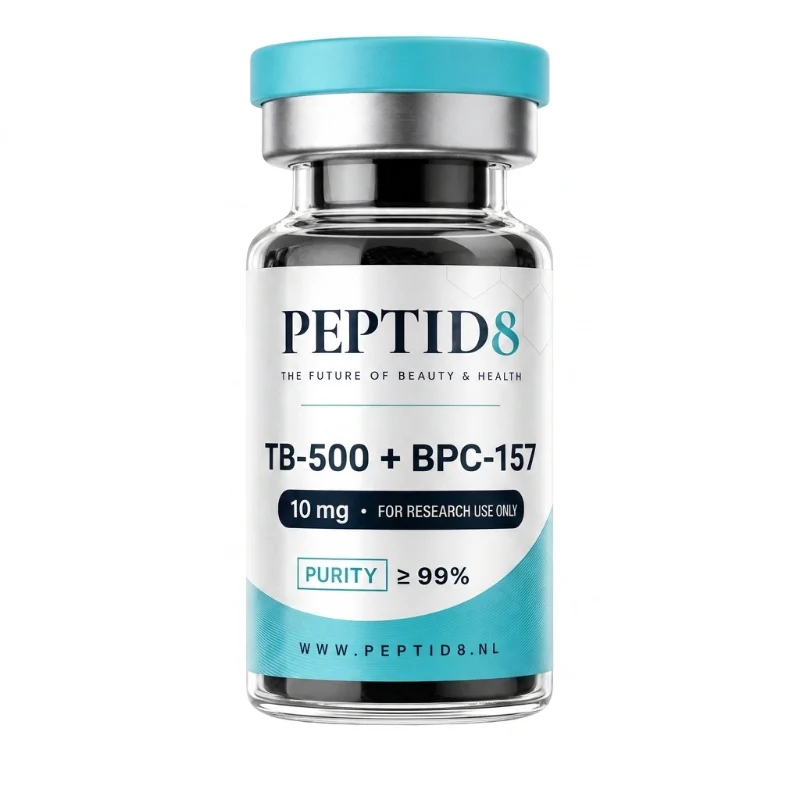
What is the difference compared to the BPC-157 + TB-500 blend?
This vial contains only BPC-157. The blend combines both substances in one vial and has its own product page with a lab report block; a report for an individual substance does not count as an analysis of the mixture.
How long is BPC-157 stable?
As a dry powder at −20 °C, a vial remains stable for a long time; the exact expiration date is stated on the label. Once dissolved, the shelf life is shorter: keep refrigerated and process within your protocol timeframe.
How is it shipped and does it need to be refrigerated?
The lyophilized powder is shipped dry from the Netherlands, neutrally packaged with sender: within the Netherlands typically the next business day, within the EU 1–4 business days. Upon receipt, place the vial immediately in the freezer (−20 °C).
What is in the package?
One vial of lyophilized powder, labeled as research use only. Bacteriostatic water, syringes, and alcohol swabs are not included as standard and can be ordered additionally on this page.
How do I place an order?
Place products in your shopping cart and complete the order at checkout. There you enter your details, choose a payment method, and confirm the three mandatory declarations. You will immediately receive a confirmation by email with the overview and, in case of payment by bank transfer, the payment details.
When will my order be shipped?
Ordered and paid before 22:00 on business days: shipped the same day. In the case of a bank transfer, the time your payment is received applies. After 22:00, on weekends, or on public holidays, your order will be dispatched on the next business day. If it is busy, this will be stated at the top of the site with the new shipping date.
Complete your research
Related research
All in Recovery Research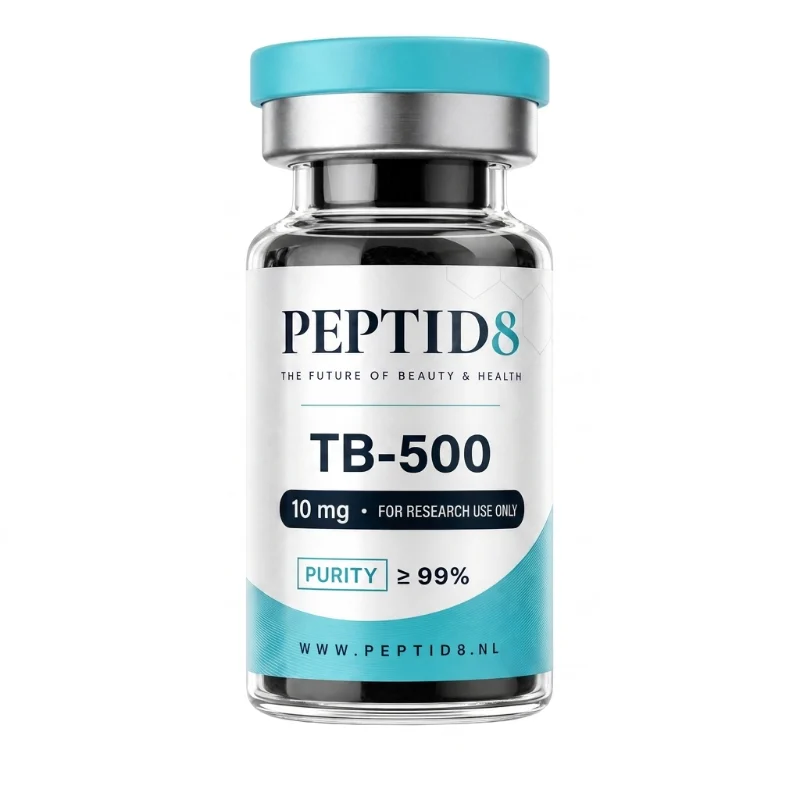
Read more
BPC-157 in research: what the literature measures
BPC-157 is a synthetic pentadecapeptide derived from a protein found in gastric juice. Which models the literature uses, which mechanisms it cites, and where the research ends.
BPC-157 vs TB-500: Two Peptides, Two Mechanisms
BPC-157 and TB-500 are often mentioned together, but differ in origin, length, and mechanism. A comparison based on the literature, including a table and a look at the blend.
Storing peptides: lyophilisate, solution, and shelf life in the lab
Lyophilised powder or dissolved peptide: how to store research peptides so that measured purity is maintained? On temperature, moisture, light, aliquoting, and labelling.